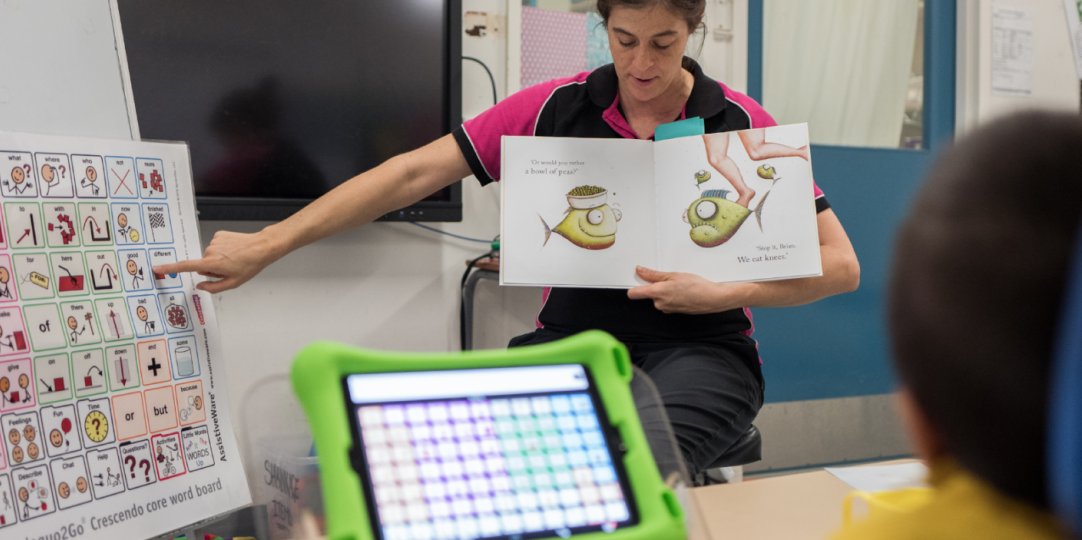
AAC Does NOT Prevent Speech
How Supporting Communication Helps Children Talk More

One of the most common concerns parents share when AAC is recommended is this:
“If my child uses AAC, will they stop trying to talk?”
It’s a very understandable fear. The reassuring truth is this: AAC does not prevent speech. In fact, decades of research and clinical experience show that AAC often supports and increases spoken language over time.
AAC gives children a way to communicate now—while speech skills are still developing.
Speech and Language Are Not the Same
Speech is how words are produced using the mouth, lips, tongue, and voice.
Language is how ideas, meaning, and messages are shared.
A child can have strong language understanding and ideas to share but struggle with producing clear speech. AAC supports language expression while speech skills continue to grow.
When language continues to develop, the foundation for speech becomes stronger—not weaker.
Why AAC Supports (Not Replaces) Speech
AAC helps children communicate successfully, which leads to more opportunities to learn and practice speech.
When children use AAC:
- Communication becomes successful and rewarding
- Frustration decreases
- Confidence increases
- Social interactions improve
When communication feels safe and effective, children are more likely to attempt speech, not less.
AAC Reduces Pressure — and Pressure Can Block Speech
Children who are constantly expected to “say it with words” may experience stress, shutdowns, or avoidance. Stress makes speech harder.
AAC removes the pressure to perform perfectly. By allowing children to communicate in another way, AAC:
- Reduces emotional overload
- Encourages participation
- Makes speech attempts feel optional and safe
Many children begin to speak more once communication no longer feels overwhelming.
AAC Models Language the Brain Learns From
AAC provides a visual and consistent model of language. When adults use AAC alongside speech (called modeling), children:
- See how words connect to meaning
- Learn how sentences are built
- Strengthen vocabulary and grammar
These language skills are the building blocks for speech, reading, and writing.
What Research Tells Us
Research across multiple populations consistently shows that AAC:
- Does not delay speech development
- Does not reduce speech attempts
- Often increases verbal output over time
Professional organizations such as American Speech-Language-Hearing Association support AAC as a tool that enhances—not hinders—communication development.
AAC Is a Bridge to Communication
AAC is not a last resort or a permanent decision. It is a supportive bridge that gives children access to language while speech skills develop.
For some children, AAC is temporary.
For others, it is long-term.
For many, it is used flexibly—sometimes alongside speech, sometimes instead of it.
What matters most is that the child can communicate effectively.
Early Communication Access Matters
Waiting for speech before supporting communication can unintentionally limit a child’s learning, social interaction, and confidence.
When children have access to AAC early:
- Language continues to grow
- Learning opportunities increase
- Behavior related to communication frustration often decreases
- Confidence and connection improve
Our Approach
We believe every child deserves a way to be heard. AAC is introduced thoughtfully, respectfully, and alongside speech development—not in place of it.
If AAC has been recommended for your child and you have questions or concerns, we’re here to help.
Reach out to learn more about AAC evaluations, parent education, and individualized communication support.
Bright Blooms Therapy Blog